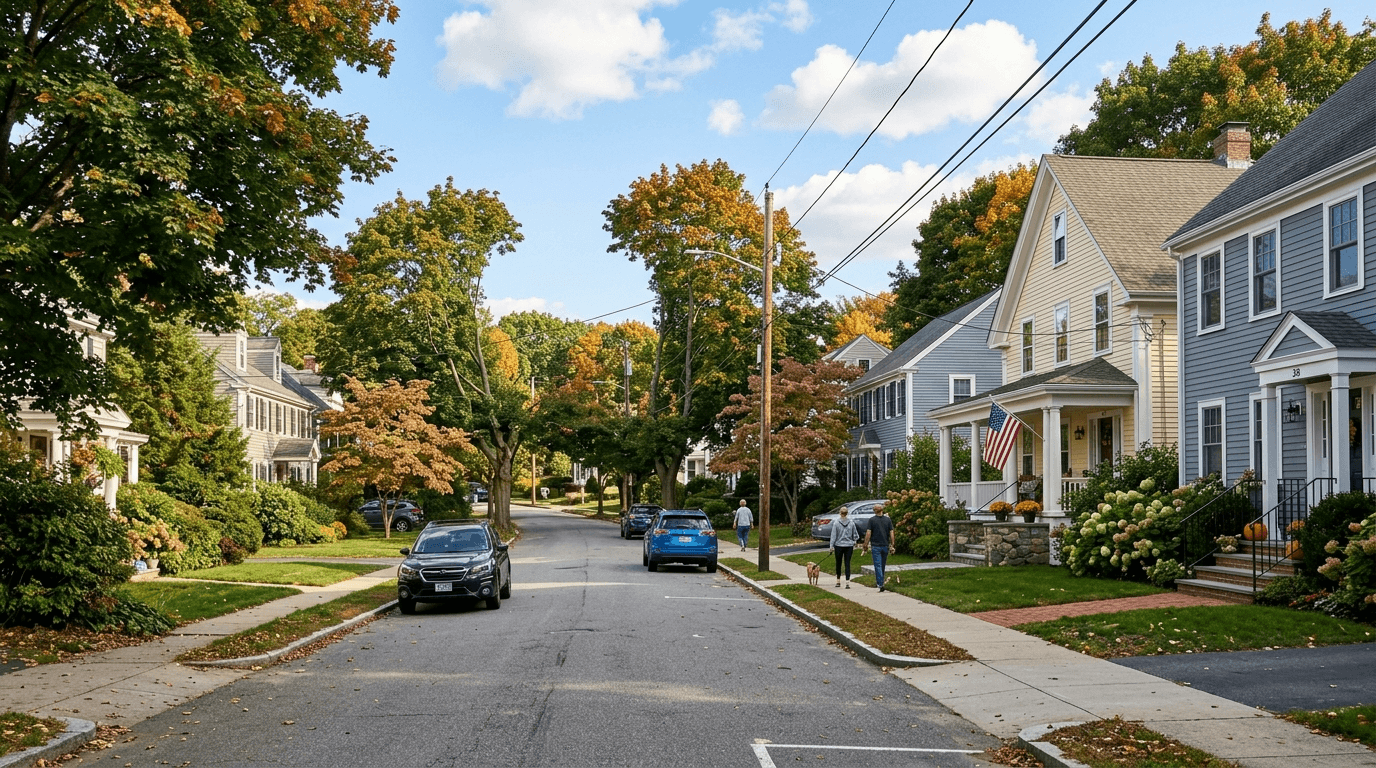
Local housing market analysis — single-family vs. condo (Arlington, June 2026)
Arlington’s $840K House vs. Condo Choice
Written ByPeter Bouchie
PublishedJune 16, 2026
UpdatedJune 15, 2026
Read Time12 min read
Work with Peter Bouchie, a Belmont, MA real estate agent with 10+ years of residential sales experience across Greater Boston. Serving Belmont, Newton, Scituate, Cambridge, Watertown and Arlington, MA.
# Inside Arlington's Market: How Do a House and a Condo That Closed This June Compare?
Key Takeaways
•The short answer: At around $840K in Arlington this June, you're choosing between a single-family house that likely needs work (sitting well below the SFH median of $1,185,000) and a turnkey condo bought at or near the condo median of $836,500.
•The house play: Land, long-term upside, and no monthly HOA fee — but plan for a meaningful renovation budget that can push your all-in cost well above the purchase price.
•The condo play: Move-in ready, walkable, predictable — but you'll pay both town property tax AND a monthly condo fee on top of your mortgage.
•The bottom line: For buyers with a 3–5 year horizon and no renovation capacity, the condo is the lower-friction buy. For buyers with a 7–10 year horizon, cash reserves, and contractor access, the single-family may build more wealth — if the repair math works.
Why Is This Price Point So Telling in Arlington This June?
$840K sounds like one number. In Arlington, it can buy two very different lives.
This June, two closings make that choice concrete.
One was a single-family home — including a sale on Summer Street — that traded for roughly $840,000. That sits far below Arlington's typical single-family price. The other was a condo that closed around the same figure, landing right at or near the segment median.
As of June 15, 2026, May's tight inventory is still shaping the market. June is now showing buyers exactly where the line falls between "deal with a project" and "turnkey at a discount."
For single-family homes, speed is the pressure point. Arlington single-family homes are moving in about 6 days from list to first offer, according to the David Lenoir Homes weekly snapshot for the week of June 8, 2026. That's distinct from the 13 median days on market in the 180-day data below — days on market typically measures list to close, while 6 days measures list to offer.
That distinction matters for your wallet. In a market that moves this fast, a low price is rarely just a gift. It usually means you need to price in repairs, updates, or compromises before you make the offer.
What Does an $840K Budget Actually Buy in Arlington Right Now?
Over the last 180 days, Arlington single-family homes had a median sold price of $1,185,000. Condos had a median sold price of $836,500. Mixed properties sat in between at $937,000.
Arlington Market Snapshot by Property Segment — Last 180 Days
Hero snapshot comparing median sold price, median days on market, and months of inventory for Arlington single-family, condo, and mixed property segments over the last 180 days.
An $840K single-family is about 29% below the single-family median of $1,185,000. That discount almost always signals condition issues, a smaller layout, a tougher location, or some combination of all three. An $840K condo, by contrast, lands right at the condo median of $836,500 — not a steep discount, but a normally priced unit in a softer segment.
The house may offer more long-term upside. The condo may offer more immediate comfort and fewer financial surprises. Single-family homes remain Arlington's highest-priced segment, ahead of both mixed properties and condos.
Median Sold Price by Property Segment
Single-metric comparison of median sold prices across Arlington property segments over the last 180 days.
Single-metric comparison of median sold prices across Arlington property segments over the last 180 days.
This is the key point for buyers at this budget: you are not shopping the same "level" of product across property types. You are shopping a below-market house versus a near-median condo.
Why Might the House Be the Better Long-Term Play?
On paper, the $840K single-family is the deal. You're buying below the median in a town where single-family supply is tighter — and that can be powerful over time.
What you get with the house:
•You own the land, which is often the strongest long-term asset.
•You avoid a monthly HOA fee.
•You control your own repairs and improvement timeline.
•You may have future expansion or accessory dwelling potential.
That's an attractive profile — if you have cash reserves and patience.
But buyers need to be honest with themselves here.
What you may also get:
•A smaller home or an awkward layout.
•An older roof, heating system, kitchen, or bath.
•Deferred maintenance that was easy to miss during a fast offer process.
•More pressure to waive protections in a 6-day market.
A typical Arlington home from the 1920s–1950s housing stock can need real work. Kitchen, bath, systems updates, and roof work are not small line items. That affects your true purchase price — the renovation budget for a below-median Arlington single-family can be meaningful enough to materially change the all-in cost. Get a written contractor estimate before committing.
The house can be the wealth-building choice. But only if the repair math works before you sign.
Why Might the Condo Be the Cleaner Buy?
The $840K condo is the turnkey play. You're not buying the land — but you may be buying something far easier to live in right away, and for many Arlington buyers, that matters.
What you get with the condo:
•You can often move in quickly, with no contractor timeline to manage.
•Exterior maintenance is shared.
•Monthly costs are easier to plan.
•You may be closer to Arlington Center, Capitol Square, or the Minuteman Bikeway.
That can improve your day-to-day life immediately — more walkability, an easier commute, less time managing repairs.
What you need to watch:
•HOA fees sit on top of your mortgage.
•You still pay Arlington property tax.
•Special assessments can happen.
•You may have less outdoor space.
•Some buildings limit pets or rentals.
Here's the part many first-time Arlington buyers miss: condo owners pay both town property tax and a monthly condo fee. The property tax is based on the town's assessed value of your unit. The condo fee covers shared building costs. A lower purchase price does not automatically mean a lower monthly payment.
The condo market is also slower than the single-family market. Condos carried 5.6 months of inventory over the last 180 days, compared with 4.5 months for single-family homes.
Months of Inventory by Property Segment
Comparison of available inventory, measured in months, across Arlington property segments over the last 180 days.
Comparison of available inventory, measured in months, across Arlington property segments over the last 180 days.
That looser supply cuts both ways. On the way in, it gave this June's $840K condo buyer more room to negotiate — something that's harder to achieve in the faster single-family market. On the way out, that same softness becomes a resale risk. With 5.6 months of inventory and 17 median days on market, the condo will likely take longer to sell when the buyer eventually exits, compared to 4.5 months and 13 days for single-family. For any buyer thinking about a short hold, that's a real factor.
How Do the Two June Closings Stack Up Side by Side?
$840K Single-Family vs. Condo Comparison in Arlington
Compares the costs, market positioning, inventory, maintenance, renovation expectations, neighborhood patterns, and buyer fit for an $840K Arlington single-family home versus an $840K Arlington condo in June 2026.
At $840K, the single-family home sits about 29% below the single-family median of $1,185,000, with 13 median days on market and 4.5 months of inventory. The condo lands at or near the condo median of $836,500, with 17 median days on market and 5.6 months of inventory.
A quick note on the two speed figures for single-family: the 6 days cited earlier is list-to-offer from the weekly snapshot. The 13 days in the comparison above is the 180-day median days on market, measuring list to close. Both are accurate — they capture different parts of the timeline.
The cost structures differ in plain terms:
•The single-family option means mortgage and town property tax, maintenance handled by you, and a meaningful renovation budget to plan for.
•The condo adds an HOA fee on top of mortgage and tax, exterior maintenance handled by the association, and typically minimal renovation cost if the unit is turnkey.
So the choice isn't simply house versus condo. It comes down to this:
Do you want upside with more unknowns? Or certainty with less control?
What Are the Best Arguments Against This Comparison?
This comparison is useful — but it deserves honest pushback.
Can two closings really define Arlington's market?
Not by themselves. Two sales are a small sample. Some readers may also note that other Arlington market reports have cited higher segment medians — for example, $1.44M for single-family and $1.01M for condos in shorter or differently defined windows.
The medians used here ($1,185,000 SFH and $836,500 condo) come from the 180-day Repliers/MLSPIN snapshot above. A 180-day window smooths out monthly noise and seasonality, which is why it serves as the benchmark. Shorter windows can produce higher headline numbers, especially when luxury sales concentrate in a given month. Both sets of figures exist, and the choice of window changes the framing.
Either way, these two closings sit right at the edge of the market and show what a buyer around $840K may need to accept right now. In the single-family market, that often means condition risk. In the condo market, it may mean a more negotiable path.
The practical takeaway: don't treat the house price as your final cost. Treat it as the starting point.
Could HOA fees erase the condo's advantage?
They can — and this is the strongest argument against the condo.
Arlington condo association fees vary widely by building, age, and amenities. Pull the actual fee from the MLSPIN listing and the association's budget before assuming anything. If fees run several hundred dollars a month, that's real money over a five-year hold, and special assessments can add more.
The house carries a similar risk in a different form. A below-median Arlington house often has deferred maintenance — one that may arrive as a large surprise rather than a steady monthly fee. The condo fee is visible and predictable. The house repair bill is hidden until it isn't. Which is "better" depends entirely on whether the buyer can absorb a large one-time bill or prefers a known monthly line item.
Before buying a condo, review the master deed, budget, reserves, and meeting notes. Before buying the house, review the inspection, roof age, heating system, electrical, plumbing, and town assessor card.
Don't Arlington single-family homes usually appreciate faster?
Often, yes — and this is the strongest argument against the condo for long-hold buyers.
Public Arlington market data has shown single-family values rising materially more than condos over the 2021–2026 period, with single-family appreciation cited in the 40%-plus range over that five-year stretch in some local reports. Condos have generally lagged that pace.
For a 7+ year hold, that gap matters. The wealth difference between a slower-appreciating condo and a faster-appreciating house can be significant over a decade, even after HOA fees and renovation costs.
Two cautions apply to this specific $840K house, though:
1. A single-family at 29% below the segment median may not capture full segment appreciation. Below-median properties often carry location, lot, layout, or condition constraints that drag on resale. Segment-average appreciation figures are not a guarantee for the bottom of the segment.
2. The buyer still has to survive the first few years without the renovation bill consuming the appreciation.
The practical takeaway: for a 7–10 year buyer with renovation capacity, the house is likely the better wealth play. For a 3–5 year buyer — or one without contractor access — the appreciation gap may not be enough to overcome the renovation friction.
What Should Arlington Buyers Do With This Budget?
The answer comes down to your time horizon and your renovation capacity.
The condo makes more sense if:
•You have a 3–5 year horizon.
•You don't want a renovation project.
•You value walkability and predictable monthly costs.
•You can absorb a known HOA fee in your budget.
The single-family makes more sense if:
•You have a 7–10 year horizon or longer.
•You have cash reserves beyond the down payment.
•You have a trusted contractor.
•You can walk away if the renovation math doesn't work.
A good rule for this market: don't fall in love with the list price. Study the total cost.
That means purchase price, repairs, taxes, insurance, utilities, HOA fees if applicable, and the time cost of getting the home where you want it. Build that table for both options before you choose.
What Should Arlington Sellers Take From These June Closings?
If you're selling a single-family home, condition matters — even in a fast market. Buyers are moving quickly, but they're not moving blindly. Homes that need obvious work still draw more cautious offers.
Even modest improvements can shift that dynamic:
•Fresh paint.
•Refinished floors.
•Cleaner landscaping.
•A refreshed bath.
•Better lighting.
These updates reduce buyer hesitation. Less hesitation typically means stronger offers.
If you're selling a condo, don't price against the town's headline single-family numbers. The condo segment carries more supply and more buyer choice. The June 2026 condo closing is a reminder: price against the condo market, or you'll sit.
So, Which Arlington Buy Makes More Sense This June?
There's no universal answer — and any framing that suggests otherwise oversimplifies the decision.
For short-horizon buyers (3–5 years) prioritizing predictability, the turnkey condo is the more certainty-driven buy. It offers more negotiating room going in, better walkability, and lower day-one friction. The tradeoff is slower expected appreciation and softer resale liquidity.
For long-horizon buyers (7–10 years) with cash reserves and contractor access, the single-family is likely the better wealth play — provided the renovation budget pencils out before signing. The tradeoff is more risk, more work, and more pressure in a fast-moving segment.
The honest answer: at this price point, the condo is the safer short-term lifestyle buy. The house is the higher-upside long-term project buy. Neither is "better" without knowing your timeline and your tolerance for renovation risk.
If you want to see how this tradeoff looks for your exact budget, neighborhood, or property type, reach out and we can run the total-cost numbers side by side before you make a move.
Common Questions
What does $840K buy in Arlington MA real estate right now?
$840K buys two very different options in Arlington MA real estate: a below-median house that likely needs work, or a turnkey condo near the condo median. The draft says single-family homes had a $1,185,000 median over 180 days, while condos had a $836,500 median.
Is an $840K Arlington single-family home a good deal?
An $840K Arlington single-family home can be a good long-term play, but only if the renovation math works. The article says this price is about 29% below the single-family median, so the home likely has condition, size, lot, or location tradeoffs. Repairs could push the all-in cost toward $1M.
How do condo fees change the true cost of Arlington condos?
Condo fees make Arlington condos less simple than the purchase price suggests. A condo owner pays town property tax and a monthly HOA fee on top of the mortgage. The article notes that older condos can also face special assessments, so buyers should review the master deed, budget, and reserve health.
How fast are Arlington single-family homes selling in June 2026?
Arlington single-family homes are selling very quickly in June 2026. The article cites a 6-day market from list to offer for the week of June 8. That speed means buyers have little time to study renovation costs, and mistakes can be expensive in Arlington MA real estate.
Is a condo or a house the cleaner buy at $840K in Arlington?
The condo is the cleaner buy for most $840K Arlington buyers in this article. It offers move-in readiness, walkability, and more predictable costs in a softer condo segment. The house may build more wealth, but only for buyers with cash, contractor access, and patience for renovations.
Will an $840K fixer in Arlington cost closer to $1M after repairs?
An $840K fixer can move closer to $1M once repairs are included. The article uses a possible $125K renovation example, creating about a $965K basis. It also says a sub-median Arlington house may need kitchen, bath, roof, or systems work, which can be costly.